Herculaneum Scroll
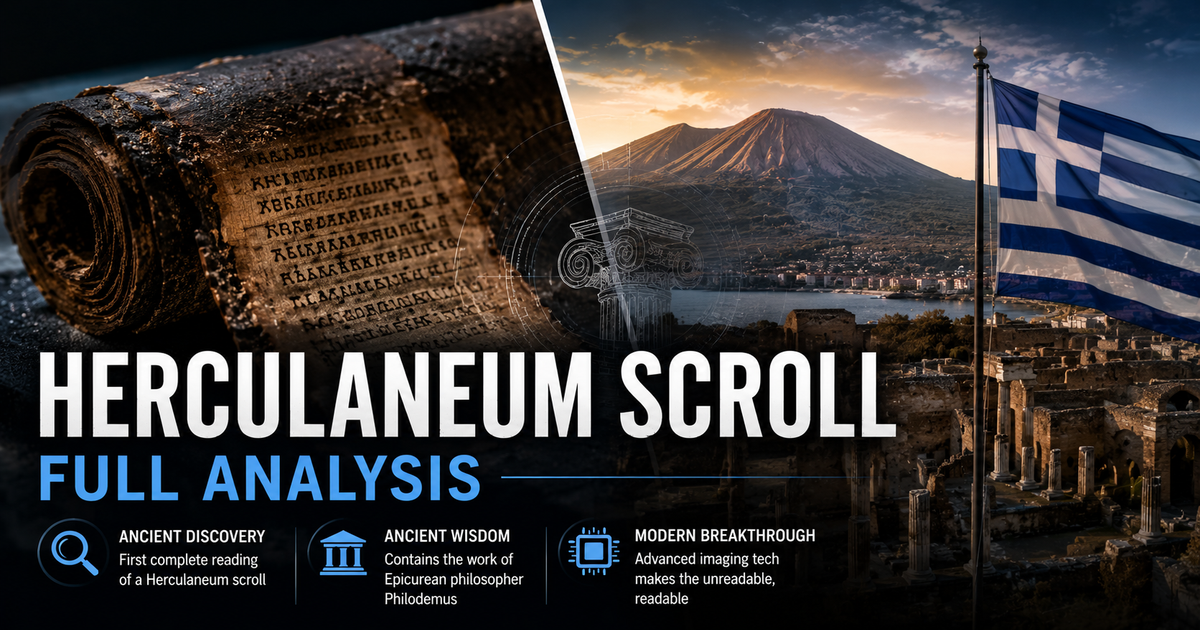 Herculaneum Scroll
First complete reading of Herculaneum scroll
- First complete reading of Herculaneum scroll
- New insights into ancient Greek philosophy
- Scroll contains work of Epicurean philosopher Philodemus
The Herculaneum scrolls, which were discovered in the 18th century, are a collection of ancient Greek texts that were preserved by the volcanic eruption of Mount Vesuvius in 79 AD. For centuries, scholars have been trying to decipher the contents of these scrolls. But the fragile state of the papyrus and the damage caused by the eruption have made it a challenging task. Recently, a team of researchers has successfully read an entire Herculaneum scroll, providing new insights into ancient Greek philosophy. here, we will explore the significance of this discovery and what it reveals about the past.
In This Article
- What Happened
- Why This Matters Right Now
- Who Is Affected and How
- Examples and Real-World Impact
- What Could Happen Next
What Happened
The Herculaneum scrolls were discovered in the 18th century in the ruins of a villa in Herculaneum, a town that was destroyed by the eruption of Mount Vesuvius. The scrolls were found to be in a fragile state, with many of them damaged or partially destroyed. Despite the challenges, scholars have been working to decipher the contents of the scrolls, using various techniques such as unrolling and digital imaging. Recently, a team of researchers has successfully read an entire Herculaneum scroll, using a combination of digital imaging and machine learning algorithms. The scroll, which is about 10 meters long, contains the work of the Epicurean philosopher Philodemus.
Why This Matters Right Now
The discovery of the Herculaneum scrolls is significant because it provides a unique window into the past, allowing us to gain insights into the thoughts and ideas of ancient Greek philosophers. The scrolls contain a wide range of texts, including philosophical treatises, poems, and speeches, which provide valuable information about the cultural and intellectual context of the time. The reading of the entire scroll is a major breakthrough, as it allows scholars to study the text in its entirety and gain a deeper understanding of the author's ideas and arguments. This discovery is also significant because it demonstrates the power of digital technology in preserving and analyzing cultural heritage.
Who Is Affected and How
The discovery of the Herculaneum scrolls affects scholars and researchers in the field of classical studies, as well as anyone interested in ancient Greek philosophy and culture. The reading of the entire scroll provides new insights into the thoughts and ideas of Philodemus, which can be used to inform and refine our understanding of Epicurean philosophy. The discovery also highlights the importance of preserving and protecting cultural heritage, as the scrolls are a unique and valuable resource that can provide insights into the past. Additionally, the use of digital technology in analyzing the scrolls demonstrates the potential of interdisciplinary collaboration between scholars and technologists.
Examples and Real-World Impact
For example, the scroll contains a text on the nature of the gods, which provides valuable insights into the theological ideas of the Epicureans. The text argues that the gods are not involved in human affairs and that the universe is governed by natural laws, rather than divine intervention. This idea is significant because it challenges the traditional view of the gods in ancient Greek religion and provides a unique perspective on the nature of the divine. The discovery of this text has the potential to inform and refine our understanding of ancient Greek theology and its influence on Western philosophy.
Example: The scroll's text on the nature of the gods can be compared to the ideas of other ancient Greek philosophers, such as Aristotle and Plato, to gain a deeper understanding of the development of theological thought in ancient Greece.
What Could Happen Next
The reading of the entire Herculaneum scroll is a major breakthrough, but it's also just the beginning of a new era of research and discovery. Scholars will continue to study the scroll and its contents, using a range of techniques and methodologies to gain a deeper understanding of the text and its context. The use of digital technology in analyzing the scrolls also opens up new possibilities for collaboration and innovation, as scholars and technologists work together to develop new tools and methods for preserving and analyzing cultural heritage. As the field of classical studies continues to evolve, we can expect to see new discoveries and insights emerging from the study of the Herculaneum scrolls.
What This Means for You
The discovery of the Herculaneum scrolls is a significant moment in the field of classical studies, as it provides a unique window into the past and allows us to gain insights into the thoughts and ideas of ancient Greek philosophers. The use of digital technology in analyzing the scrolls also demonstrates the potential of interdisciplinary collaboration between scholars and technologists. As we continue to study the scrolls and their contents, we can expect to see new discoveries and insights emerging. Which will refine our understanding of ancient Greek philosophy and culture. The study of the Herculaneum scrolls is a reminder of the importance of preserving and protecting cultural heritage, as these unique and valuable resources can provide insights into the past and inform our understanding of the present.
Frequently Asked Questions
What are the Herculaneum scrolls?
The Herculaneum scrolls are a collection of ancient Greek texts that were preserved by the volcanic eruption of Mount Vesuvius in 79 AD.
What is the significance of the Herculaneum scrolls?
The Herculaneum scrolls are significant because they provide a unique window into the past, allowing us to gain insights into the thoughts and ideas of ancient Greek philosophers.
“As we continue to study the scrolls and their contents, we can expect to see new discoveries and insights emerging.”
Who is Philodemus?
Philodemus was an Epicurean philosopher who lived in the 1st century BC and wrote on a range of topics, including philosophy, poetry, and rhetoric.
What is the importance of preserving cultural heritage?
Preserving cultural heritage is important because it allows us to learn from the past and gain insights into the thoughts and ideas of previous generations.
How can digital technology be used in analyzing cultural heritage?
Digital technology can be used in analyzing cultural heritage to develop new tools and methods for preserving and analyzing cultural artifacts, such as the Herculaneum scrolls.
Conclusion
The reading of the entire Herculaneum scroll is a major breakthrough in the field of classical studies, providing new insights into ancient Greek philosophy and culture. As scholars continue to study the scroll and its contents, we can expect to see new discoveries and insights emerging. Which will refine our understanding of the past and inform our understanding of the present. The use of digital technology in analyzing the scrolls also demonstrates the potential of interdisciplinary collaboration between scholars and technologists. And highlights the importance of preserving and protecting cultural heritage.
Sources
Join the Conversation
What are your thoughts on the significance of the Herculaneum scrolls? Share your comments and insights below.
Also read: Om Malik Passes Away


Comments
Post a Comment