iPhone Ultra Price to Double iPhone 17 Pro Max
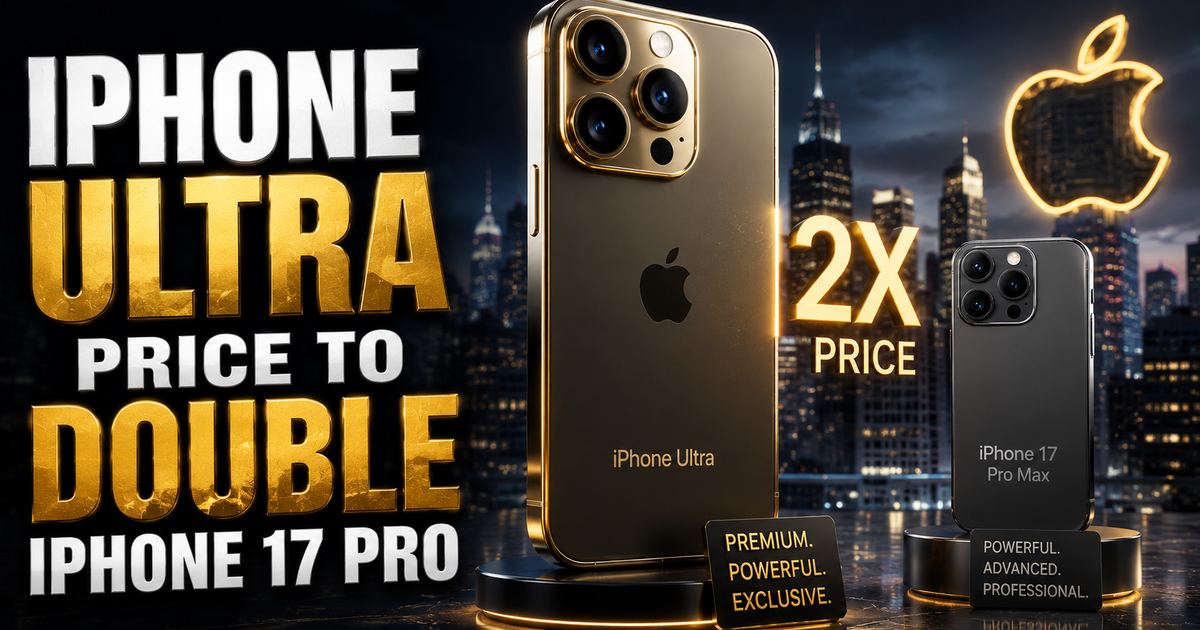 iPhone Ultra Price to Double iPh
Apple's upcoming iPhone Ultra could cost twice as much as the iPhone 17 Pro Max, signaling a shift toward extreme luxury pricing.
- The iPhone Ultra is rumored to cost twice as much as the iPhone 17 Pro Max.
- This pricing strategy targets a new ultra-premium segment above the Pro models.
- The move reflects Apple's effort to increase average revenue per user.
Apple is reportedly preparing to redefine the upper echelon of its smartphone lineup with a new 'Ultra' model that could carry a staggering price tag. According to a recent report by Mashable, the upcoming iPhone Ultra is expected to retail for double the price of the iPhone 17 Pro Max. This potential pricing strategy signals a bold shift in Apple’s hardware approach, aiming to carve out a distinct ultra-luxury category separate from its existing Pro offerings. In this analysis, we examine the implications of this pricing structure, the strategic rationale behind such a move, and what it means for the broader smartphone market.
In This Article
- What Happened
- Why This Matters Right Now
- Who Is Affected and How
- Examples and Real-World Impact
- What Could Happen Next
What Happened
The technology market was met with surprising reports this week regarding Apple's future hardware roadmap. According to Mashable, industry insiders suggest that the long-rumored iPhone Ultra will be positioned at a price point exactly double that of the iPhone 17 Pro Max. While specific dollar figures were not disclosed in the initial claims, the multiplier provides a clear indication of Apple's intent to establish a new pricing ceiling for its mobile devices. This report aligns with previous rumors suggesting Apple seeks to diversify its portfolio further beyond the standard and Pro tiers. The claim specifically positions the Ultra not merely as a better Pro. But as an entirely separate entity designed for a demographic that views current flagship pricing as insufficient for a truly premium product.
Why This Matters Right Now
The timing of this report is critical given the current saturation of the global smartphone market. For years, smartphone manufacturers have struggled to drive significant unit growth, leading many to pivot toward increasing revenue through higher average selling prices. If Apple proceeds with pricing the iPhone Ultra at double the rate of its top-tier Pro model, it represents an aggressive acceleration of this trend. It matters because it tests the elasticity of demand for Apple products in a way that has not been attempted since the original iPhone launch. also, this move comes at a time when competitors are consolidating their premium offerings. By establishing a 'super-premium' tier, Apple is attempting to insulate its revenue streams from the stagnating mid-range market, effectively betting that its most loyal users are willing to pay a significant premium for exclusivity and perceived technological superiority.
Who Is Affected and How
This pricing strategy will primarily affect two distinct groups: the high-end consumer segment and Apple's competitors. For consumers, the introduction of a device at this price point creates a new hierarchy within the Apple ecosystem. It suggests that features reserved for the Ultra—potentially advanced camera systems, exclusive materials, or distinct form factors—will remain out of reach even for those willing to purchase the Pro Max. This segmentation could frustrate power users who are accustomed to the Pro Max representing the pinnacle of Apple's technology. Competitively, this move pressures rivals like Samsung and Google. If Apple successfully monetizes a $2,000+ smartphone category, it validates a price bracket that other manufacturers have struggled to sustain. It forces competitors to either innovate rapidly to justify similar pricing or risk being viewed as 'budget' options in the luxury space, despite their high-end specifications.
Examples and Real-World Impact
To understand the gravity of this pricing shift, one must look at the historical context of smartphone pricing and consumer behavior. The iPhone 15 Pro Max currently starts at $1,199. If the iPhone 17 Pro Max maintains a similar starting price, doubling it would place the iPhone Ultra in the $2,400 range. This price point transcends typical smartphone economics and enters the territory of luxury goods, comparable to high-end mechanical watches or designer leather goods. The real-world impact of this pricing creates a scenario where the smartphone becomes a status symbol akin to an automobile or piece of fine jewelry. It changes the replacement cycle as well; consumers investing $2,400 in a device are likely to hold onto it for four to five years rather than the typical two or three, potentially impacting Apple's trade-in program and secondary market liquidity.
Example: Consider a professional photographer who currently relies on the Pro Max for quick on-the-go shots. If the Ultra offers a 1-inch sensor or periscope zoom capabilities unavailable in the $1,200 Pro Max, this user is forced into a difficult financial decision: upgrade to the Ultra for professional-grade quality or settle for the Pro Max and accept compromised features. This tiering effectively professionalizes the hardware, moving it from a consumer utility to a specialized professional tool.
What Could Happen Next
Should these reports materialize, the industry can expect a ripple effect across the supply chain and retail sectors. Manufacturing such a high-margin device requires distinct components, likely leading to tighter supply constraints initially. We may also see Apple introduce new financing options or subscription services to make the upfront cost more palatable, perhaps bundling the Ultra with exclusive AppleCare or iCloud tiers. Additionally, this opens the door for Apple to experiment more radically with form factors or materials, such as titanium or ceramic, which were previously too expensive for the mass-market Pro line. There's also the risk of alienating the core base; if the Ultra cannibalizes sales of the Pro Max without significantly expanding the total user base, Apple's overall unit shipments could decline. However, the financial focus remains on profitability over volume, suggesting Apple is prepared for a potential dip in unit sales in exchange for a massive boost in revenue per device.
What This Means for You
The reported pricing strategy for the iPhone Ultra indicates a definitive shift from volume-driven growth to value extraction. By placing a device at double the cost of the current flagship, Apple is effectively creating a luxury sub-brand within the iPhone ecosystem, similar to how the automotive industry separates standard models from their high-performance counterparts. This move suggests that Apple believes the ceiling for smartphone pricing has not yet been reached and that brand equity alone can sustain a $2,000+ mass-market device. From a business perspective, this creates a moat against commoditization. As hardware specifications across the industry plateau, Apple is banking on exclusivity and brand prestige to drive upgrades. It's a calculated risk that assumes the 'Ultra' moniker will carry enough weight to justify a price tag that prices out even the most dedicated early adopters, relying instead on a wealthier demographic seeking differentiation.
Frequently Asked Questions
How much will the iPhone Ultra cost?
Reports claim the iPhone Ultra will be priced at double the cost of the iPhone 17 Pro Max.
When will the iPhone Ultra be released?
While no specific date was given, the report references the iPhone 17 Pro Max, suggesting a launch timeline around 2025.
“The reported pricing strategy for the iPhone Ultra indicates a definitive shift from volume-driven growth to value extraction.”
What makes the iPhone Ultra different from the Pro Max?
While specific features were not detailed, the significant price hike suggests exclusive materials, advanced camera technology, or distinct performance capabilities.
Is the iPhone Ultra replacing the Pro Max?
No, the report indicates the Ultra will be a separate, higher-tier model sitting above the Pro Max in the lineup.
Why is Apple increasing the price so drastically?
The move is likely a strategy to increase revenue per user and target the ultra-luxury market segment as smartphone sales growth slows.
Conclusion
The prospect of an iPhone Ultra priced at double the cost of the Pro Max marks a significant evolution in Apple's business strategy. It highlights a transition toward luxury goods economics, where exclusivity and brand prestige supersede mass-market adoption. As the industry watches closely, the success or failure of this model will likely dictate the future of premium pricing in the technology sector.
Sources
Join the Conversation
Do you think a smartphone is worth $2,400? Share your thoughts in the comments below.
Also read: Amazon Bonds


Comments
Post a Comment